WHY YOUR PERSONAL STYLE FEELS SO IMPERSONAL
It's not you. It's your algorithm. (Plus a guide to curating an ideal, well-vetted wardrobe.)
Some of the links included in this post are affiliate links, meaning if you purchase the items below, I’ll make a small commission.
In the words of Kali Uchis, I know what I want.
Thong sandals. Barrel leg jeans. Intrecciato handbags. Colorful crocheted skirts. And XXL nails that rival the works of Jenny Bui—Cardi B’s nail artist. Call me dramatic, but knowing what I want and why I want it is an advantage within the world of shopping.
In 2026, monoculture is dead and microtrends reign supreme. Our attention is now divided between legacy publications and the innumerable influencers declaring which aesthetic is in. Consequently, little room is left for creative intelligence, personal style and emotional expression.
This week, 90s-era minimalism is the new “chic,” (à la Carolyn Bessette-Kennedy). Next week, a new trend will arrive with a closet full of appealing new clothing and leave with a quiet exit and a forgotten hashtag.
But I’ve discovered there’s a privilege in having a personal style that’s unwavering against this cult-like era of shopping. Trends are volatile but style is forever mutable.
Developing a personal, curated wardrobe in a deeply impersonal world is a road with no destination—despite what the algorithm may tell you. It has several detours, evolving with age, lifestyle and shifting beliefs.
And if you don’t know who you are or what you like, there will be a company that’s eager to tell you.
How to Find Your Personal Style
Curiosity is the first ingredient to crafting great style. Patience is the second.
Have you ever fallen into the rebrand trap? Those moments where your credit card precedes your self-control, and you’ve spent hundreds of dollars on wardrobe overhaul: sequined tops, cerulean pumps and fur coats that are inauthentic to your personality and lifestyle.
Before you immediately buy what you see on social media or aimlessly peruse retailers, develop a system for scouting your next items. A personal style that is intentional starts with curiosity and a taste for sartorial reform. This is the time to slow down and develop childlike tendencies.
Question everything!
Ask yourself:
What do I own that makes me feel confident?
What’s practical?
Whose style do I appreciate? Why? What about their style speak to me?
Is there a time period I’d love to indulge in through my wardrobe?
Is there a way to incorporate my other interests into my clothing?
Here’s an example:
Baggy jeans, kitten heels, corsets and sneakers are what make me feel most confident. Marrying feminine and masculine attire gives me that unique balance I love.
I work from home so sweatpants, loose-fitting sets and cozy sweaters are practical for me.
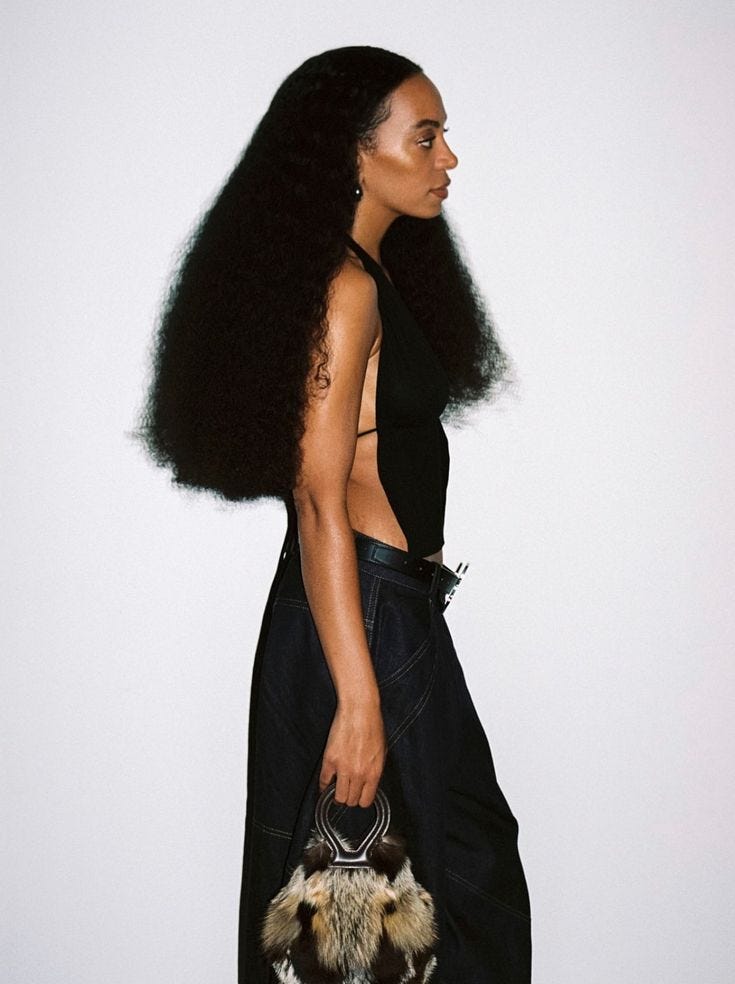
I adore Naomi Elizée, Solange, Mariah the Scientist and Rihanna for their style. The blend of maximalist patterns, tailoring and archival pieces feels both luxurious and unique to each of their brands.
Late 90s and early aughts. That Essence Magazine and 106 & Park style of clothing. Bronzed down. Dressed up.
I can pair these Chinese slippers-inspired kitten heels with baggy jeans to give my going-out look a 2000s refresh.


Try incorporating the culture, art and music you enjoy into your style.
Love the bedazzled corsets on Sabrina Carpenter? Implement a simpler version into your nightlife glam. Enjoy the billowy style of Olivia Dean? Try a satin skirt with your next lunchtime outfit.
When you base your wardrobe around your interests in and outside of the closet, a general idea of what to wear can form.
So you’ve let your curiosity unfurl and curated a collection of interests. In other words, you’ve made a Pinterest board and you’re ready to replicate outfits based on those Pins. Wait.
Instead of buying new products on a whim, collect the images you like the most and note what’s prevalent. Cederick Campbell, a Detroit-based style expert, has a great video on this method. If you wanna go full analog, grab a poster board, a printer and some sticky notes for this method.
Enable 3rd party cookies or use another browser
Are you constantly noting how much you love tabi shoes? Is leopard print a pattern you include frequently? Once you’ve recognized the patterns or recurring themes in your moodboard, add those items to your wishlist.
Now, it’s time to shop.
Another reason why your current wardrobe might feel so impersonal is because you’re only shopping for special occasions. Think little black dresses or that fiery red blazer you’ve been dying to wear but “haven’t found the right event yet.”
Shopping for these imagined events is fine in moderation but can become disorienting when you have dozens of statement pieces but nothing to wear. You need staples and clothes that suit your lifestyle. Not the one you’re dreaming about.
I like to shop on a 5:2 ratio—five idealistic pieces to two imagined pieces, always maintaining a balance of what’s real and what can be created.
Going back to my work-from-home lifestyle, I wear sweats, plain t-shirts, hoodies and cozy sets. On special occasions, I like to pop out in a pair of platform wedges, a corset and statement jeans. Shopping for a capsule wardrobe, basic items that work with almost any outfit, helps build a style that’s suited for your real life.
Full transparency, I enjoy shopping at H&M, ASOS, Fashion Nova and local thrift stores for these pieces.
You must actually wear clothes to see if you like them or not.
What fits a Fashion Nova model might not fit you, and oftentimes it takes trial and error determines that. There’s a sense of humility that comes with this, I know.
Let me be the first to say you don’t need an ultra-curated style that’s social media optimized. I’ve had several outfits that make me cringe, but at the moment, I enjoyed wearing them. But it took me experimenting to learn that.
I also encourage in-person shopping when you can and dedicating a couple days throughout the year to trying on clothes in a store, slowly and intentionally. Look at the cut of jeans. Examine the hemming of your shirts. Walk in a pair of heels.
If possible, bring someone with you who understands your style, needs and body type to give feedback.
Resources to Curate a Personal Style
It can be hard to find resources that connect to your style. The good news is that there’s a wealth of information out there. Here’s a mini guide into how I scout finds for my wardrobe.
Pinterest—my sanctuary and where I curate my style inspo.
Physical Media—great for reading up on style trends from the past and present. My recs: Wear It Well by Allison Bornstein, The Chiffon Trenches: A Memoir by André Leon Talley, Essence Magazine archives, Vogue archives—not physical but great for people who don’t have access.
TV Shows—art imitates life and vice versa. My recs: Sex & the City, Half & Half, Living Single, Insecure, Girlfriends and Michiko & Hatchin.
Youtube—nothing like longform content to help my attention span. My recs: iconicallyiconic for style breakdowns of fictional characters and eras, ITSCAROLYNGRAY for fashion vlogs, Sydney Marie for fashion finds and trend reports and Jada for style analysis.
Reddit—a little odd but it’s how I get honest opinions about brands and tips about fashion. My recs: Female Fashion Advice and Petite Fashion Advice.
Style is curated, reformed and enhanced throughout life. There is not one uniform process to do things. Great things take time, attention to detail and attention to quality. They require a sense of purpose that isn’t always identifiable through social media.
What my grandfather said about sermons, I’ve found, is a guiding principle on advice in general. It’s like a salad; you take what’s fitting and leave the rest. This means you can take the advice I’ve given completely, partially or not at all. That’s the beauty in developing a personal style that feels personal.
It’s up to you.